The starting point
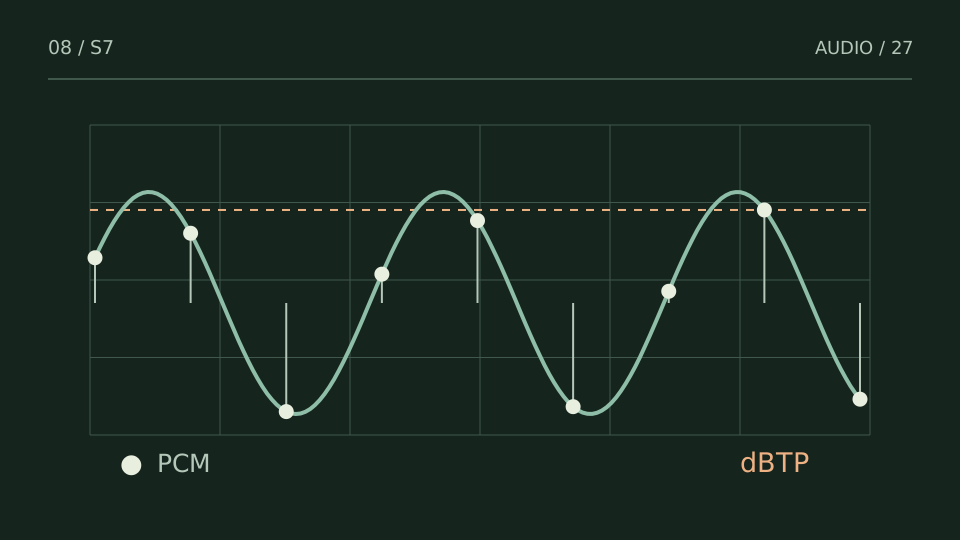
True peak estimates reconstructed signal maxima rather than only stored sample values. Check it separately from LUFS: a sensible average can coexist with very little peak headroom.
A practice case
Adding 4 dB raises peaks too
Practice case: a render measures −18 LUFS and −2 dBTP. Uniform +4 dB gain would bring loudness roughly to −14 LUFS but predicts a +2 dBTP peak. The calculator exposes that relationship before a loudness target is confused with available headroom.
The estimate does not predict a codec or limiter. After processing or conversion, analyze the final file again. Measuring only before conversion leaves the actual delivery version unchecked.
Try the calculation
Before you add gain, check the peak
Uniform-gain estimate only. Gain = target − current loudness; predicted peak = current peak + gain. Compression, gating changes and encoding require a new measurement.
Sample peak and reconstructed peak
Sample peak inspects the stored digital values. True peak estimates what happens between them during reconstruction. Accuracy depends on the measurement method and oversampling. A small disagreement between implementations does not automatically prove damage: compare settings, file and measurement point.
Choose a test from what you hear
| You notice | Try this |
|---|---|
| The entire mix lacks headroom | Try gain reduction before reflexive limiting. |
| One hit sets the maximum | Inspect that event and its source. |
| The issue appears after conversion | Inspect the converted file, not only the original. |
Bring it into your session
One pass, with a clear objective
0 / 4
Checks stay on this page and are not sent anywhere.
When to stop
The delivery file has suitable headroom for its destination without peak control undermining the intended sound.
Quick diagnosis and decision protocol
Check first
- Read dBTP separately from LUFS.
- Check the final rendered file, not only the live mix bus.
- Leave margin when the delivery chain may transcode.
Then decide
- Reduce limiter ceiling before adding more limiting.
- Re-render after sample-rate or codec changes that matter.
- Compare audible change at matched level.
Measurement boundary
A safe true-peak reading closes one failure mode; it does not guarantee a clean master.
Watch out for this: Using sample peak as if it were true peak can miss reconstruction overs.
Technical references
Documentation for the methods and product behaviour discussed. Practice cases are illustrative examples, not client case studies.
References reviewed:Try it with your own audio
Choose the free tool that fits your task. You do not need to buy a plugin to use the guide.
Open the free tools →