The starting point
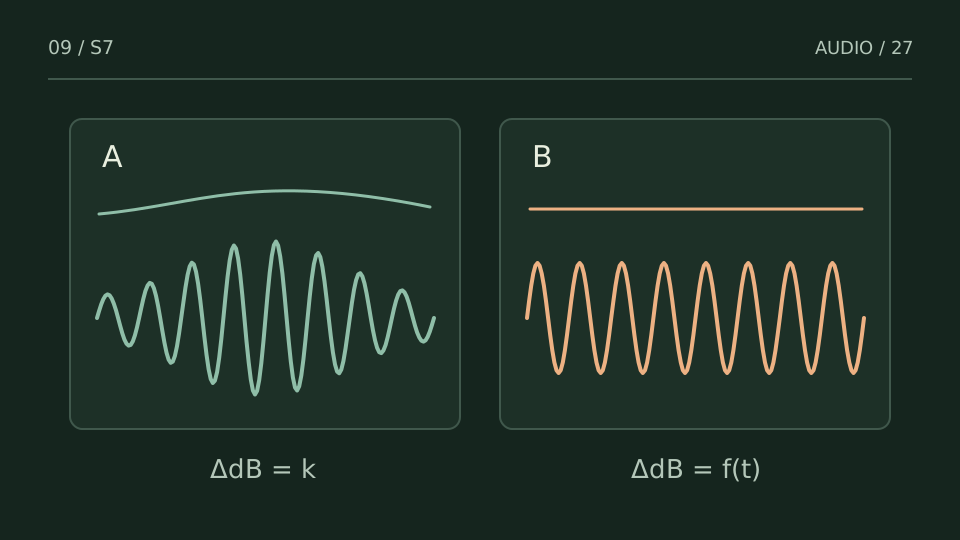
Normalization applies gain to a programme; leveling changes relationships over time. If one phrase disappears while another is correct, raising the entire file preserves that difference.
A practice case
The interview has one quiet phrase, not one quiet file
Practice case: a speaker moves away from the microphone for a sentence. Normalizing raises that sentence and everything else. If the gap between sections was the problem, it remains.
Try clip gain or automation on the quiet sentence before compressing the entire voice. Once relationships are stable, decide the overall level. In music a softer verse may be intentional: leveling should not erase expressive differences.
Try the calculation
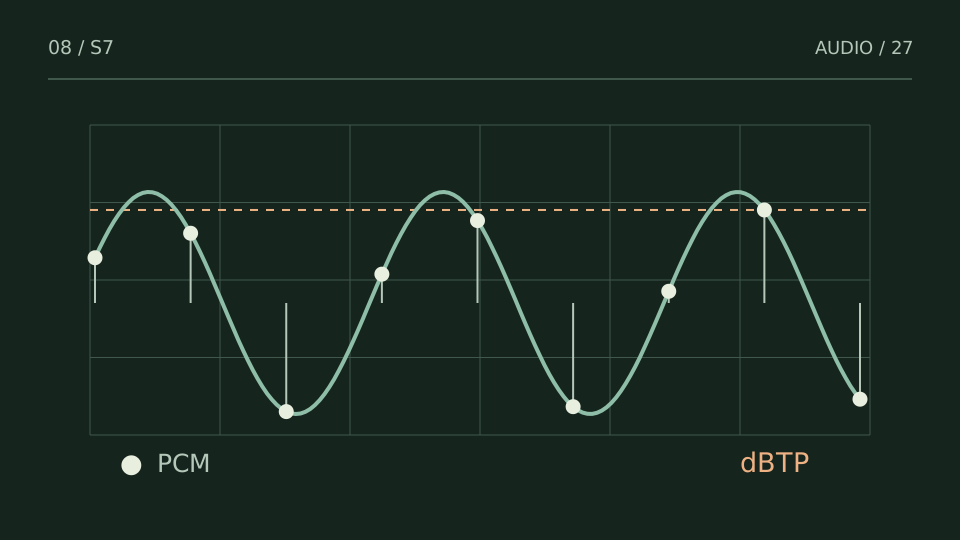
Before you add gain, check the peak
Uniform-gain estimate only. Gain = target − current loudness; predicted peak = current peak + gain. Compression, gating changes and encoding require a new measurement.
Choose a test from what you hear
| You notice | Try this |
|---|---|
| Everything needs the same change | Uniform gain or normalization. |
| Only some phrases differ | Clip gain, automation or leveling. |
| Attacks or sustain need shaping | Compression with a defined purpose. |
Bring it into your session
One pass, with a clear objective
0 / 4
Checks stay on this page and are not sent anywhere.
When to stop
Phrases have a useful relationship without losing intended expressive differences.
Quick diagnosis and decision protocol
Check first
- Ask whether the problem is absolute level, moment-to-moment level or dynamic shape.
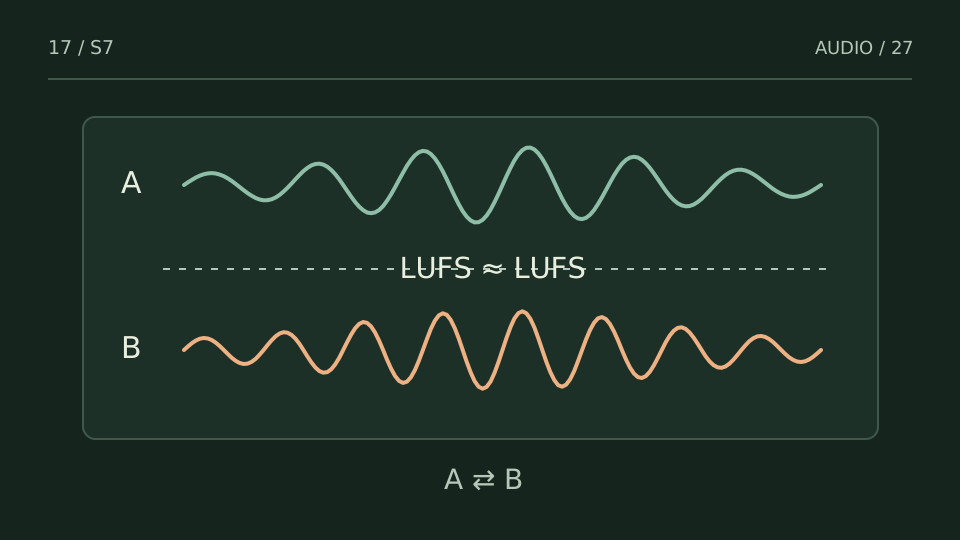
- Level-match before judging processors.
- Inspect what changes when bypassing.
Then decide
- Use gain for absolute offsets.
- Use automation or leveling for phrase balance.
- Use compression when the dynamic behavior itself needs shaping.
Measurement boundary
Correct terminology makes troubleshooting faster because each control solves a different class of problem.
Watch out for this: A louder processed signal can win an A/B even when the processing is worse.
Technical references
Documentation for the methods and product behaviour discussed. Practice cases are illustrative examples, not client case studies.
References reviewed:Try it with your own audio
Choose the free tool that fits your task. You do not need to buy a plugin to use the guide.
Open the free tools →