The starting point
Use LUFS to compare programme level, not to grade a mix. Before changing gain, note what you measured: the whole file, a chorus or a short window. They are not interchangeable readings.
A practice case
Two −14 LUFS masters with different punch
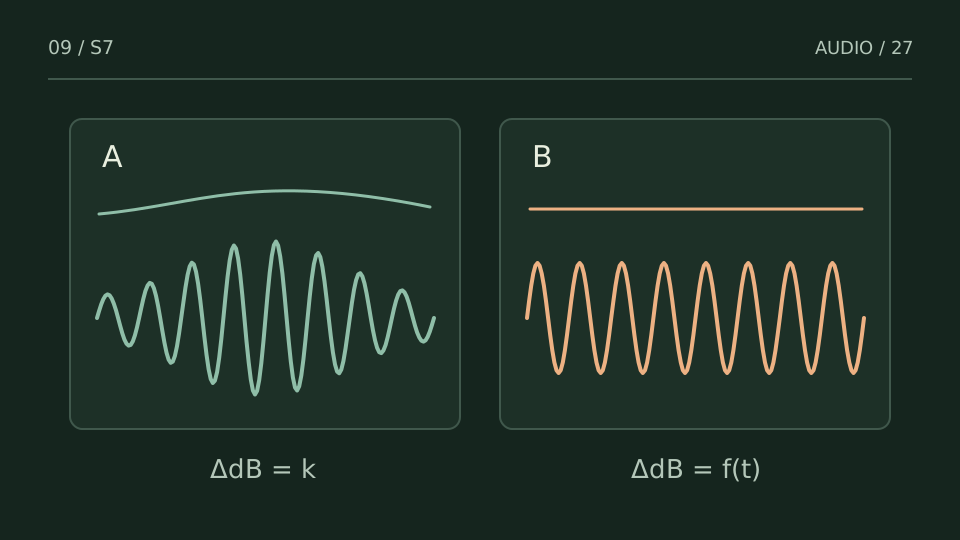
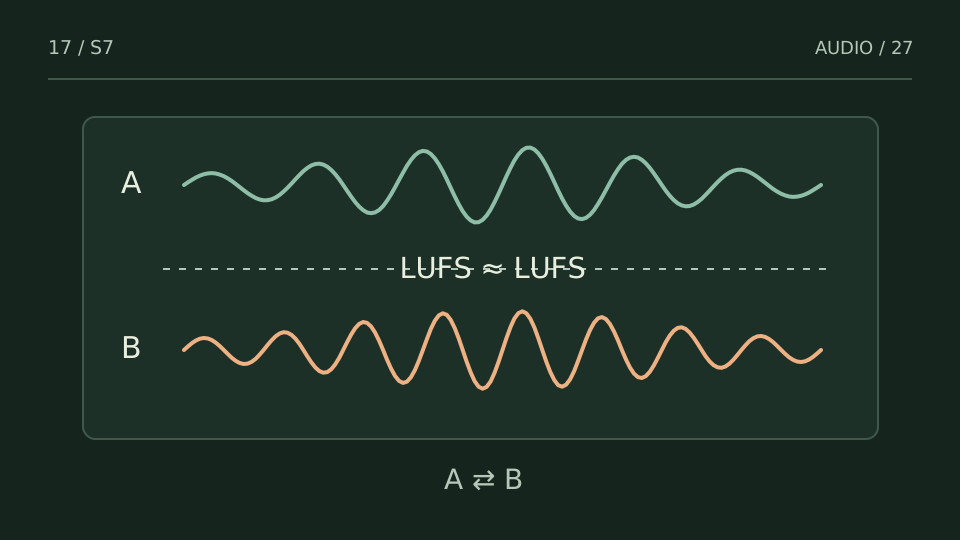
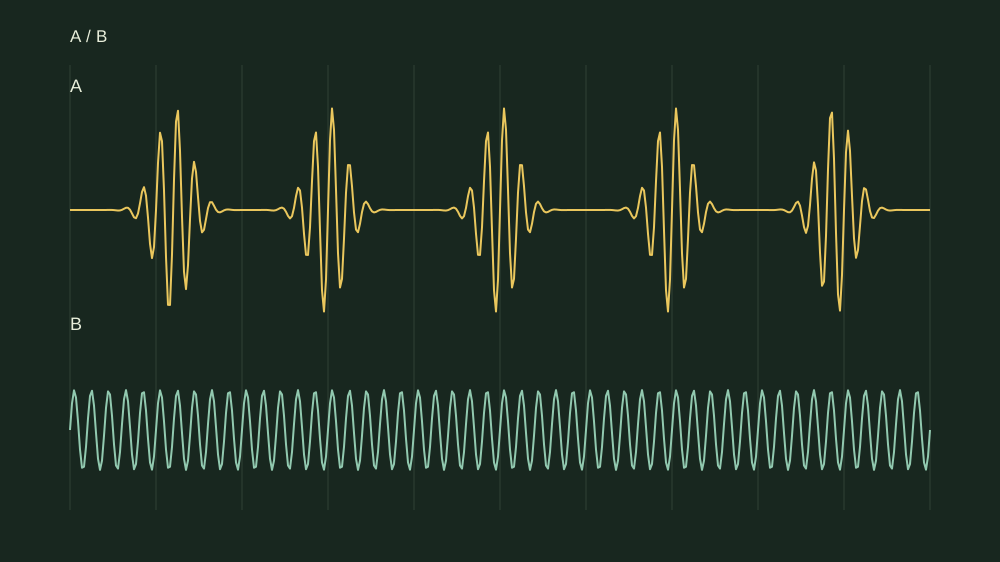
Practice case: two versions finish at −14 integrated LUFS. The first keeps the kick attack and has a quiet verse; the second holds a denser level throughout and flattens the attacks. The average can match while punch feels very different.
Compare the same chorus from each version, first level-matched and then alongside peaks and phrase behaviour. Looking only at integrated loudness misses the relationship between verse and chorus—one of the things that makes a song move.
Try the calculation
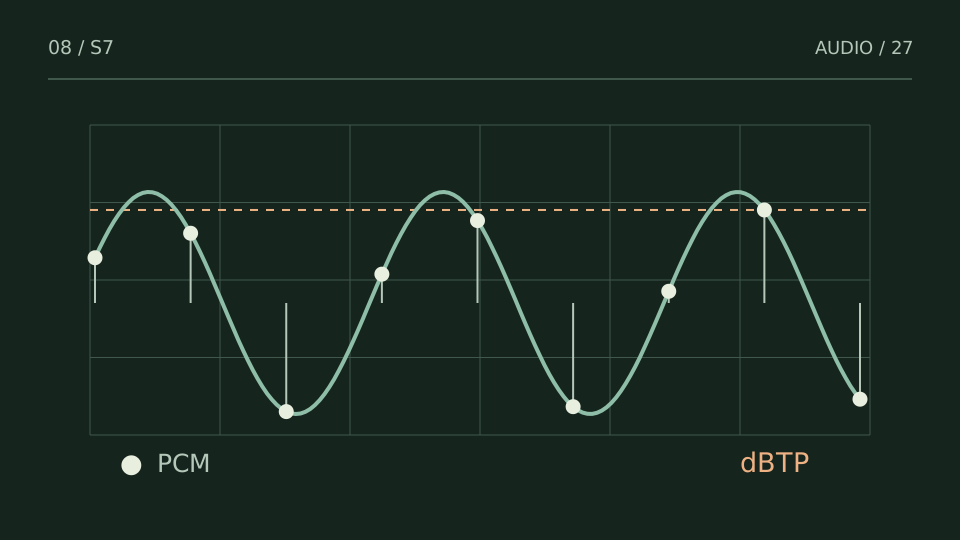
Before you add gain, check the peak
Uniform-gain estimate only. Gain = target − current loudness; predicted peak = current peak + gain. Compression, gating changes and encoding require a new measurement.
Integrated, short-term and momentary
Integrated loudness summarizes the measured programme using the loudness method. Short-term follows a roughly three-second window; momentary uses about 400 milliseconds. They answer different questions. Integrated: how does the whole track compare? Short-term: how does level move through a phrase? Momentary: what is happening right now? Reset the meter before comparing files and measure exactly the same section.
What you can calculate before processing
As an initial estimate, uniform gain shifts loudness and true peak by approximately the same number of decibels. A file at −18 LUFS needs an estimated +4 dB to reach −14. But with a current peak of −2 dBTP, that gain predicts a peak of +2 dBTP. Wishing for a different loudness value does not solve the peak constraint. This calculation does not model compression, limiting, gating changes or a new encoding pass: measure the rendered file again.
A playback reference is not a musical obligation
Spotify documents −14 LUFS for its Normal normalization setting and distinguishes album and track playback. Listener settings and playback situations without normalization also exist. Do not turn the figure into a race to compress every song identically. Treat destination delivery guidance as a technical constraint and choose dynamics for the music. A denser version does not regain its transients when a player turns it down.
A comparison that actually helps
Save one mix without the last limiting stage and another with it. Compensate for the listening-level difference. Choose a kick hit, a vocal phrase and a reverb tail to follow. If processing preserves what matters and brings the mix closer to your intention, it is useful. If it only won while louder, take a step back. This keeps the numerical target from consuming the arrangement.
Choose a test from what you hear
| You notice | Try this |
|---|---|
| The entire file is lower than needed | Check uniform gain and peak headroom. |
| Some phrases disappear | Check automation or time-varying leveling. |
| A few isolated peaks are a problem | Inspect the source and peak control; LUFS alone does not describe them. |
Bring it into your session
One pass, with a clear objective
0 / 4
Checks stay on this page and are not sent anywhere.
When to stop
Keep a version that meets the intended delivery requirements and preserves the dynamics you want. Matching a number alone does not demonstrate an improvement.
Quick diagnosis and decision protocol
Check first
- Measure the relevant time window.
- Compare references at matched playback level.
- Read LUFS together with true peak and dynamics.
Then decide
- Set a delivery target only when a destination requires one.
- Keep musical dynamics if they survive the delivery constraint.
- Use level normalization for comparison before changing processing.
Measurement boundary
Two masters at the same LUFS can sound radically different because spectrum, crest factor and distortion differ.
Watch out for this: Chasing a platform number by limiting harder can reduce quality without improving playback level.
Technical references
Documentation for the methods and product behaviour discussed. Practice cases are illustrative examples, not client case studies.
References reviewed:Try it with your own audio
Choose the free tool that fits your task. You do not need to buy a plugin to use the guide.
Open the free tools →