The starting point
Before deciding whether processing improves audio, remove its level advantage. Keep the same excerpt, compensate gain, and follow one characteristic at a time: attack, body, clarity or space.
A practice case
The plugin improves everything—until you lower its output
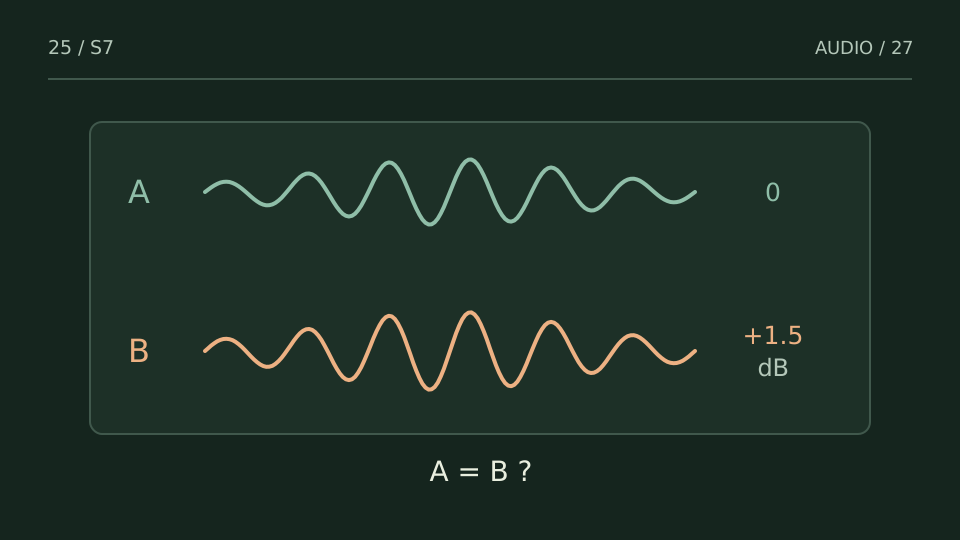
Practice case: engaging a process makes the kick feel bigger, the vocal closer and the top end more present. Output has also risen by 1.5 dB. There may be a genuine improvement, but you have not separated it from the level advantage yet.
Lower the processed output until the versions are close. Choose 8–16 bars containing the feature you want to judge. Do not compare a quiet intro against a loud chorus: that changes the arrangement as well as the processing.
Listening exercise · local audio
Which one do you prefer? Now match the level.
A and B share the same signal. B starts 1.5 dB louder. After matching, they are identical.
Use a moderate listening volume. Sound starts only when you press play.
Synthesized illustration, not a hearing test, a recording or a plugin demonstration.
A controlled comparison in three passes
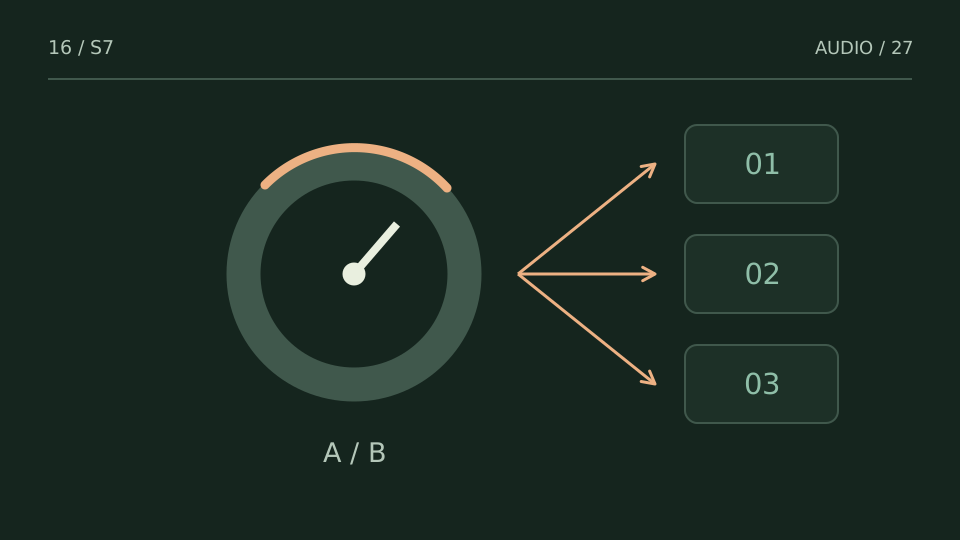
First, watch the meters and set compensation. Second, stop watching the plugin and follow one reference, such as the kick attack. Third, hear the whole phrase. If the attack improved but the vocal became harsh, the decision is no longer an abstract better or worse: you have a benefit and a cost to assess. A/B is a way to discover that, not a reason to keep a plugin at all costs.
What level matching actually means
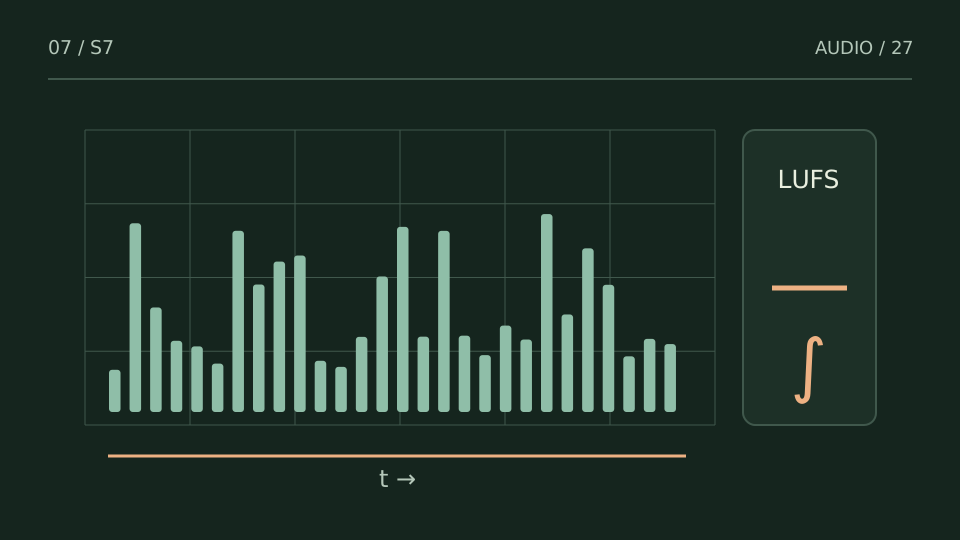
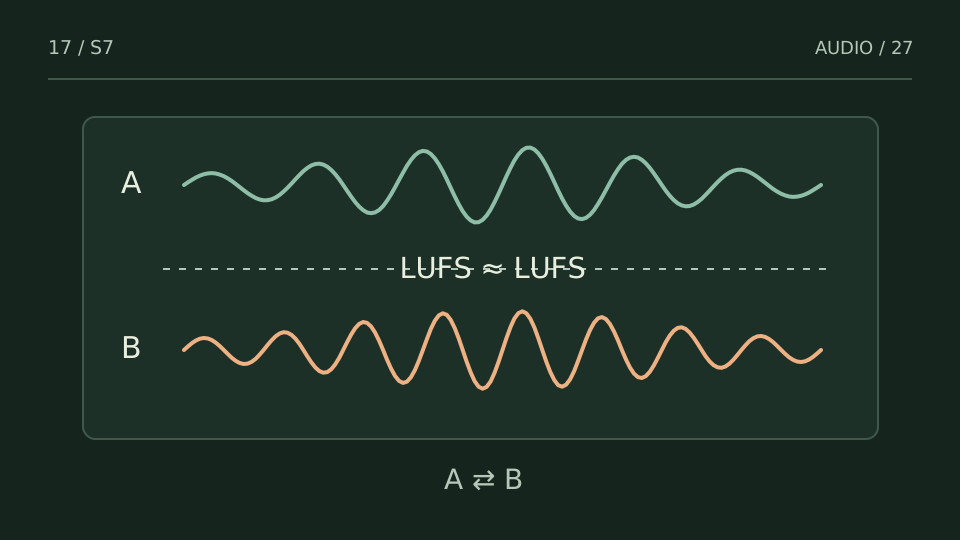
Equal maximum peaks do not guarantee similar loudness: signals can share a peak and have different density. A loudness measurement over the same excerpt helps approximate the comparison, but listening still matters. If processing substantially changes dynamics, no single gain adjustment can match every instant. Compare the same passage and note the measurement window instead of chasing an impossible match throughout playback.
Why this page’s listening test is deliberately simple
The synthesized example uses the same signal for A and B. Before matching, B has exactly 1.5 dB more gain through the factor 10^(1.5/20). Afterwards both use the same amplitude. It is not a vocal recording or a hearing assessment; it isolates one variable so you can repeat the comparison. Audio begins only when you press play and stops when you leave the page.
Choose a test from what you hear
| You notice | Try this |
|---|---|
| B only wins while louder | Reconsider how much of the preference came from level. |
| B keeps an advantage when matched | Identify the change and whether it helps the song. |
| A and B are hard to distinguish | Do not add complexity without a concrete reason. |
Bring it into your session
One pass, with a clear objective
0 / 4
Checks stay on this page and are not sent anywhere.
When to stop
You can explain the improvement without only saying bigger or louder. If there is no useful benefit, keeping the simpler version is a valid decision.
Quick diagnosis and decision protocol
Check first
- Match perceived level, not only peak.
- Switch quickly enough to retain auditory memory.
- Test in context and at low playback level.
Then decide
- Reject changes that disappear after matching.
- Keep changes whose musical effect survives matching.
- Log the chosen state before adding another processor.
Measurement boundary
Matched A/B does not tell you what to like; it removes one predictable bias from the comparison.
Watch out for this: Peak matching can still leave perceived loudness different on spectrally changed material.
Technical references
Documentation for the methods and product behaviour discussed. Practice cases are illustrative examples, not client case studies.
References reviewed:Try it with your own audio
Choose the free tool that fits your task. You do not need to buy a plugin to use the guide.
Open the free tools →