The starting point
A simple control saves time when you know the result you need. Before moving it, choose one characteristic to preserve and one to improve.
A practice case
You finished tweaking but cannot remember the starting point
Practice case: several finishing processes all seemed helpful. Ten minutes later the mix is denser, but the chorus no longer opens up. Without an untouched reference, accumulation is easy to confuse with progress.
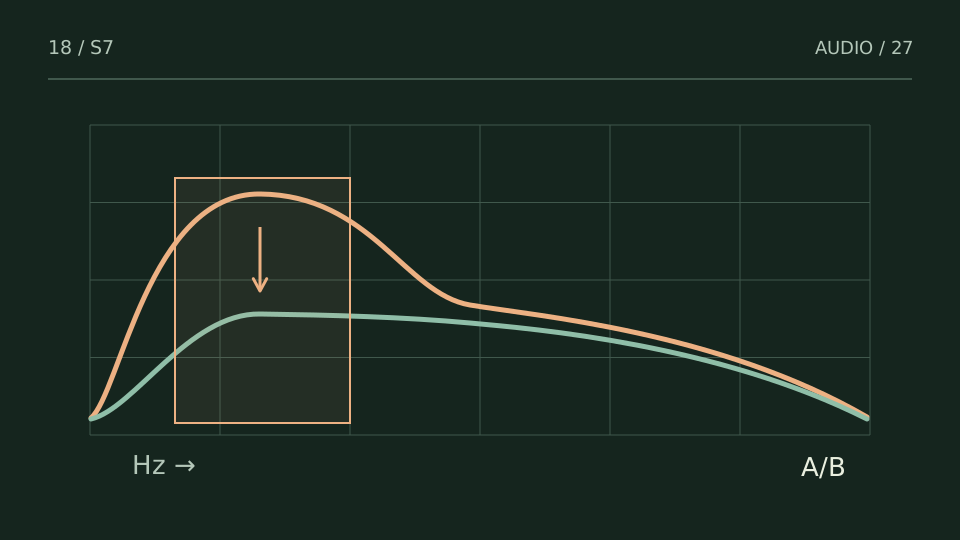
Keep a comparison version and choose one purpose: soften harshness, steady level or control excess weight. Make the change, compensate output and listen again. If a processor changes several things together, explicitly check what it sacrifices as well as what it improves.
Listening exercise · local audio
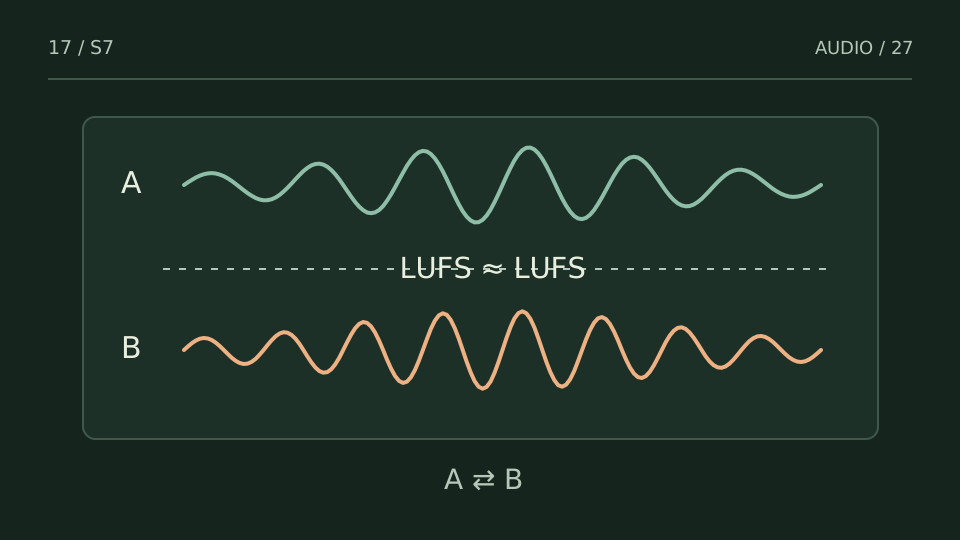
Which one do you prefer? Now match the level.
A and B share the same signal. B starts 1.5 dB louder. After matching, they are identical.
Use a moderate listening volume. Sound starts only when you press play.
Synthesized illustration, not a hearing test, a recording or a plugin demonstration.
Choose a test from what you hear
| You notice | Try this |
|---|---|
| One improvement costs something essential | Reduce the amount or use a more specific intervention. |
| You cannot describe the benefit | Compare level-matched and rest your ears. |
| It solves the task without relevant side effects | Save the decision and return to the music. |
Bring it into your session
One pass, with a clear objective
0 / 4
Checks stay on this page and are not sent anywhere.
When to stop
The process does its job without requiring three more processors to repair its side effects.
Quick diagnosis and decision protocol
Check first
- Know what family of changes the macro controls.
- Level-match bypass.
- Test at more than one source level.
Then decide
- Use the macro to reach a candidate faster.
- Stop when the source stops improving.
- Keep a reversible A/B.
Measurement boundary
Speed is valuable only if the result remains inspectable and repeatable.
Watch out for this: A macro that wins only because it is louder is not solving the problem.
Technical references
Documentation for the methods and product behaviour discussed. Practice cases are illustrative examples, not client case studies.
References reviewed:Try it with your own audio
Choose the free tool that fits your task. You do not need to buy a plugin to use the guide.
Open the free tools →