The starting point
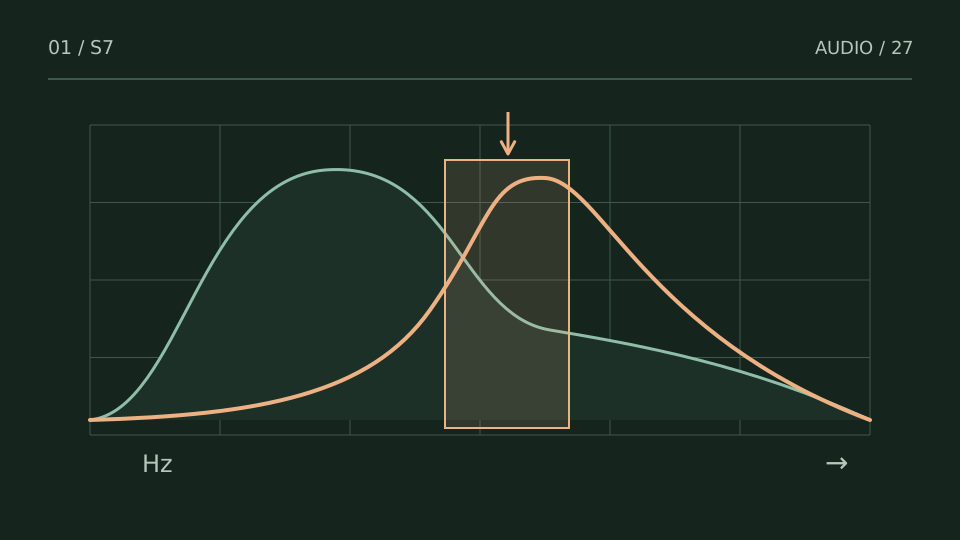
Spectral ducking reduces frequency regions in one signal in response to another. It makes sense for temporary space; it does not replace a sensible balance.
A practice case
The beat changes colour with every phrase
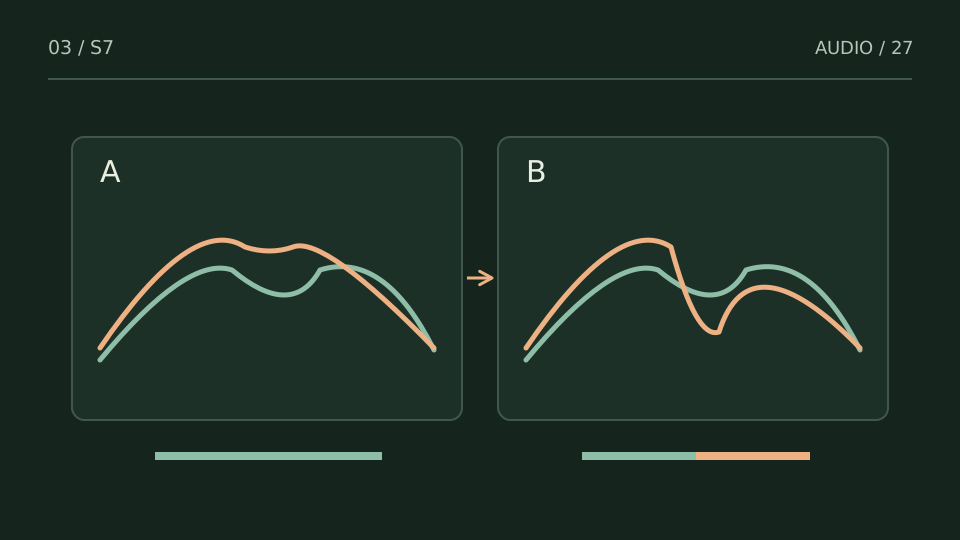
Practice case: the vocal enters and the whole beat becomes darker. Detection works, but the affected region is too broad or the reduction too deep. A large reduction can reveal the vocal while dismantling the instrumental.
Listen to the beat alone while the vocal triggers processing. Is the change concentrated on the conflict or does it reshape kick, bass and cymbals too? Restrict the range, reduce the amount and check recovery after the phrase. More movement on the display does not mean better separation.
A simple routing check
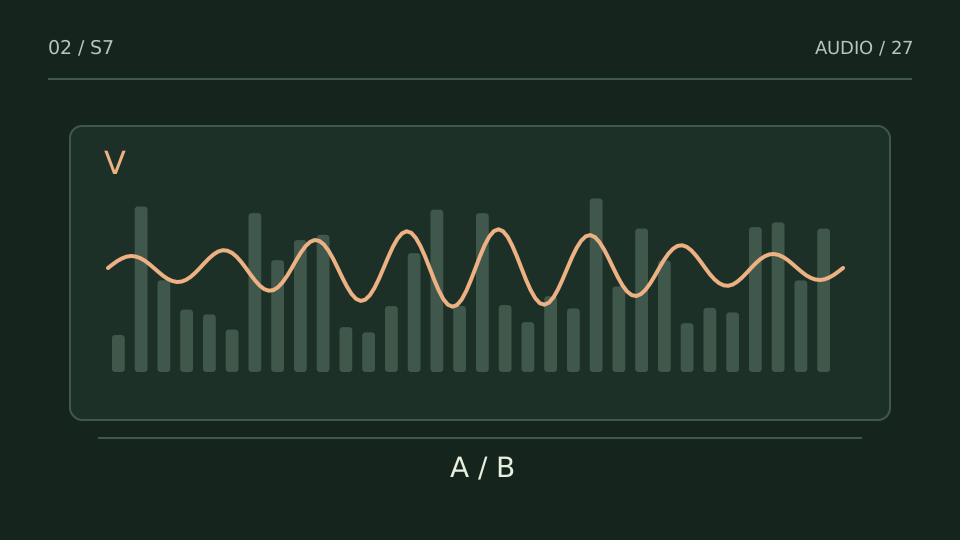
Before refining parameters, identify the processed signal and the detector signal. In a typical vocal/beat test, processing goes on the beat and the vocal controls it. The sidechain—the control input—can arrive correctly without being audible at the processor’s output. Check your host and plugin instructions before duplicating sends.
Choose a test from what you hear
| You notice | Try this |
|---|---|
| No reduction during singing | Check control input and detector activity. |
| The whole beat changes tone | Restrict range or depth. |
| A hole remains after the phrase | Check recovery and the control signal. |
Bring it into your session
One pass, with a clear objective
0 / 4
Checks stay on this page and are not sent anywhere.
When to stop
The vocal gains space during phrases while the beat keeps its identity between them.
Quick diagnosis and decision protocol
Check first
- Identify the competing bus, not every track.
- Find the smallest band that changes intelligibility.
- Compare attack and release against syllables, not only the tempo grid.
Then decide
- Start with shallow reduction.
- Trigger action only while the lead is present.
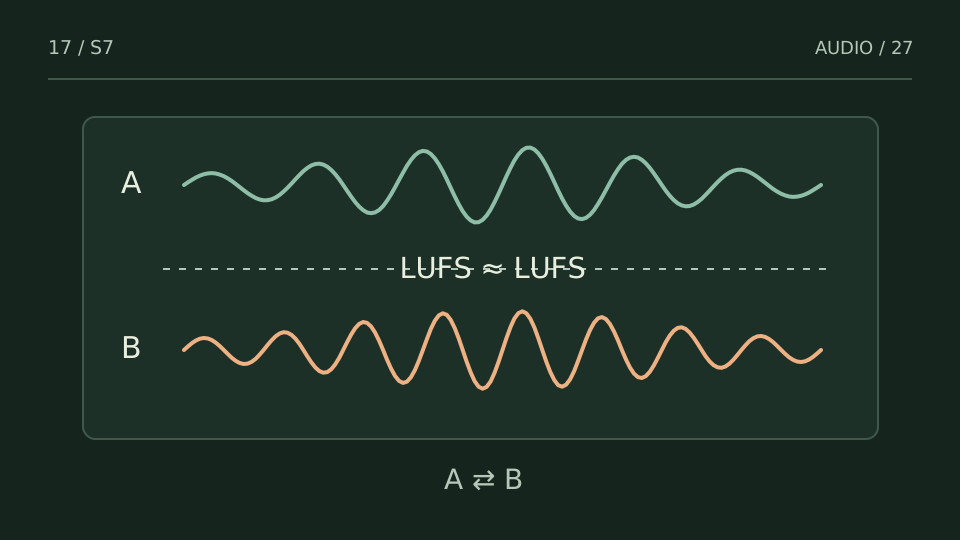
- Bypass at matched level every few changes.
Measurement boundary
Gain-reduction amount is not a quality score; use the minimum that resolves the collision.
Watch out for this: Fast, deep spectral ducking can imprint the vocal envelope onto the whole instrumental.
Technical references
Documentation for the methods and product behaviour discussed. Practice cases are illustrative examples, not client case studies.
References reviewed:Try it with your own audio
Choose the free tool that fits your task. You do not need to buy a plugin to use the guide.
Open the free tools →