The starting point
Not every wide mix fails in mono. Problems arise when part of what you hear depends on left/right differences that shrink when summed. Identify the changing instrument before trying to fix a meter reading.
A practice case
The huge pad almost disappears in mono
Practice case: kick and vocal keep their position, but the pad loses presence when mono is enabled. Before equalizing it, bypass only its widener. If the body returns, investigate that pad’s stereo processing; the whole mix does not need narrowing.
Then compare with a mono sum at approximately matched level. Some controls use L+R; others use a compensated version such as (L+R)/2, so overall level can change. Listen for the pad’s relative loss against the vocal, not just a lower output reading.
Listening exercise · local audio
Hear the centre and the sides
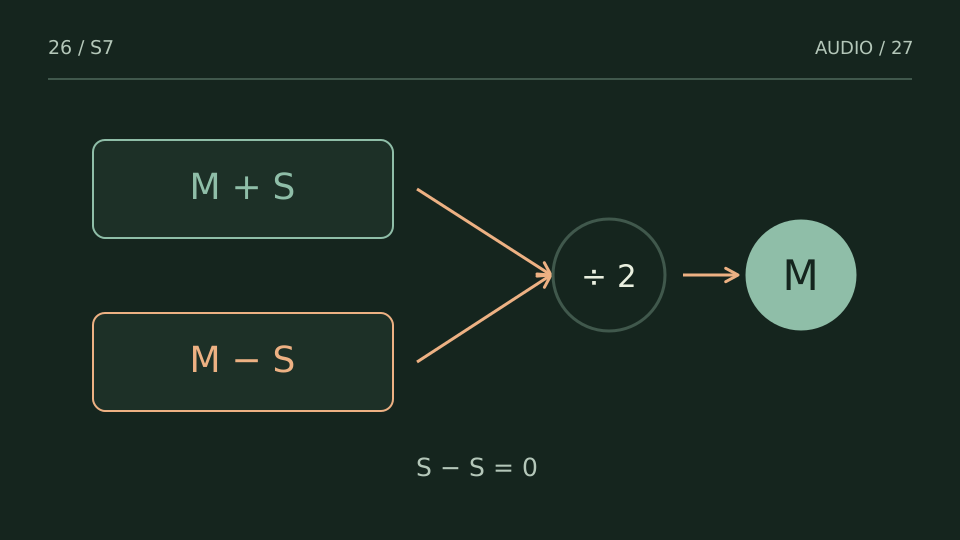
A: M+S left, M−S right. B: compensated mono sum; the side component cancels.
Use a moderate listening volume. Sound starts only when you press play.
Synthesized illustration, not a hearing test, a recording or a plugin demonstration.
The calculation behind cancellation
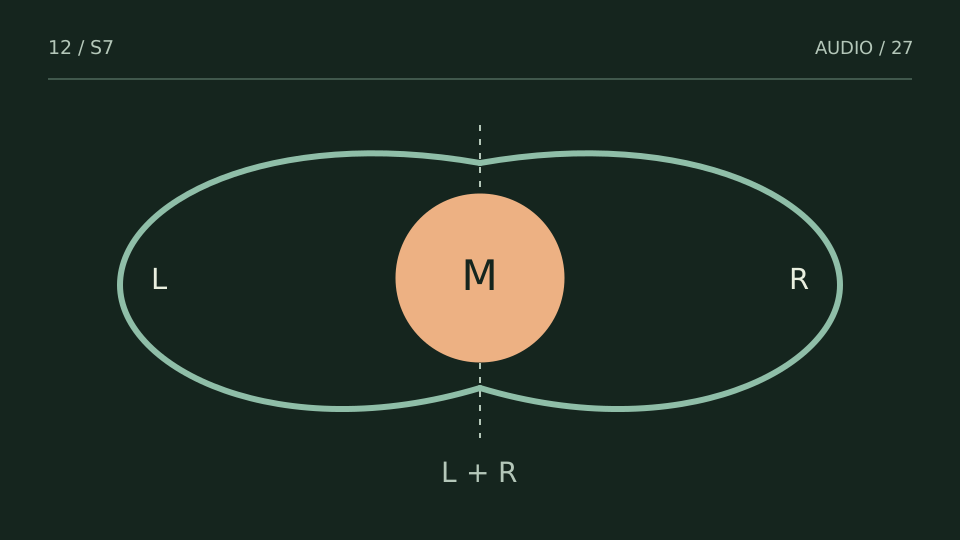
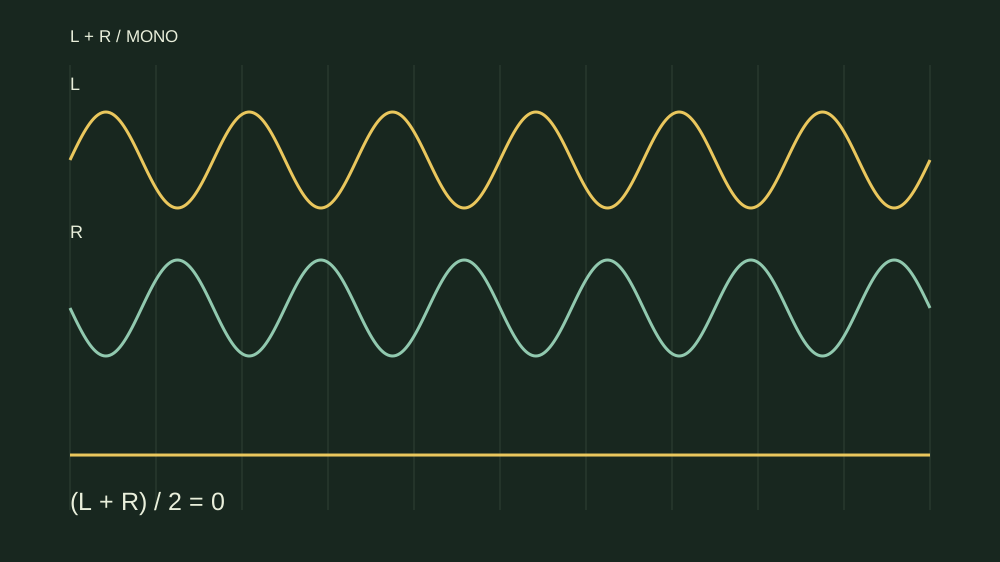
In the extreme example, if R is exactly −L, L+R is zero. Stereo is not the problem: two opposite signals cancel when added. With a common component M and a side component S, write L=M+S and R=M−S. The compensated sum (L+R)/2 retains M and removes S. This is an ideal demonstration; a real mix contains relationships that change with frequency and time.
Polarity is not the same as a short delay
Polarity inversion changes the sign of the whole signal. Delay moves it in time, changing phase relationships differently at different frequencies. That is why a short inter-channel delay can create comb filtering when summed: some frequencies fall more than others. A polarity switch does not always fix it. Try reducing the delay, lowering the wet mix or restoring some dry centre information.
Keep the width where it is useful
Separate the instrument’s musical job from its stereo decoration. A pad can retain a restrained centre foundation while its sides move. With chorus, try less wet signal before changing the entire EQ. With two distinct performances, review timing and editing without forcing them to become identical. Success means preserving the instrument’s function in mono, not making stereo and mono sound identical.
Choose a test from what you hear
| You notice | Try this |
|---|---|
| An instrument with a widener shrinks | Review dry mix, delay and centre content. |
| A two-microphone recording becomes thin | Test timing and polarity relationships in context. |
| Everything drops similarly | Check the mono control’s level compensation first. |
Bring it into your session
One pass, with a clear objective
0 / 4
Checks stay on this page and are not sent anywhere.
When to stop
The arrangement remains recognizable, vocal and foundation keep their place, and no essential part depends entirely on stereo playback.
Quick diagnosis and decision protocol
Check first
- Toggle mono at matched output level.
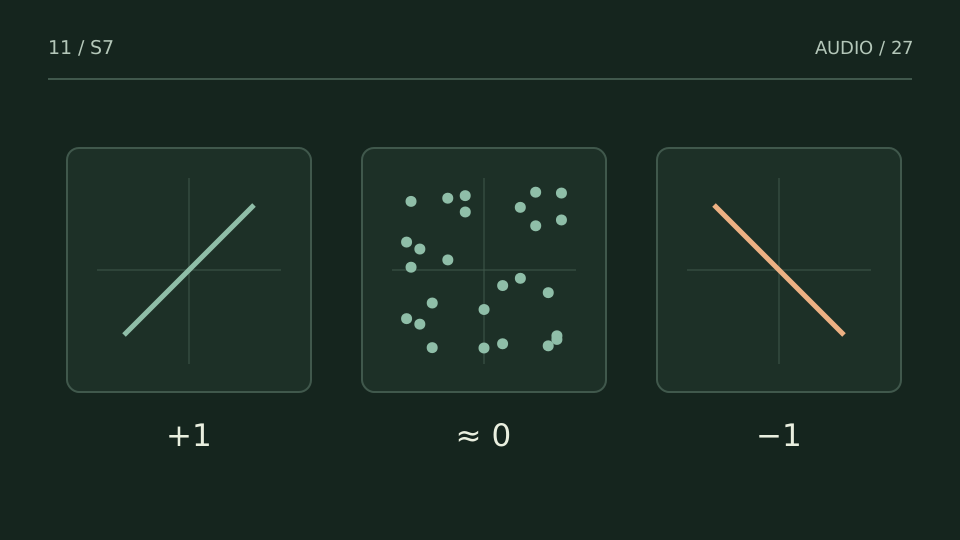
- Watch correlation while listening to the element that changes.
- Identify whether loss comes from delay, polarity, modulation or stereo synthesis.
Then decide
- Keep critical low-frequency anchors coherent.
- Reduce problematic side content rather than collapsing the whole mix.
- Check on headphones and speakers because perception differs.
Measurement boundary
Correlation helps locate risk; the audible mono sum decides whether that risk matters.
Watch out for this: A correlation value near +1 is not automatically better; it can simply mean narrower content.
Technical references
Documentation for the methods and product behaviour discussed. Practice cases are illustrative examples, not client case studies.
References reviewed:Try it with your own audio
Choose the free tool that fits your task. You do not need to buy a plugin to use the guide.
Open the free tools →