The starting point
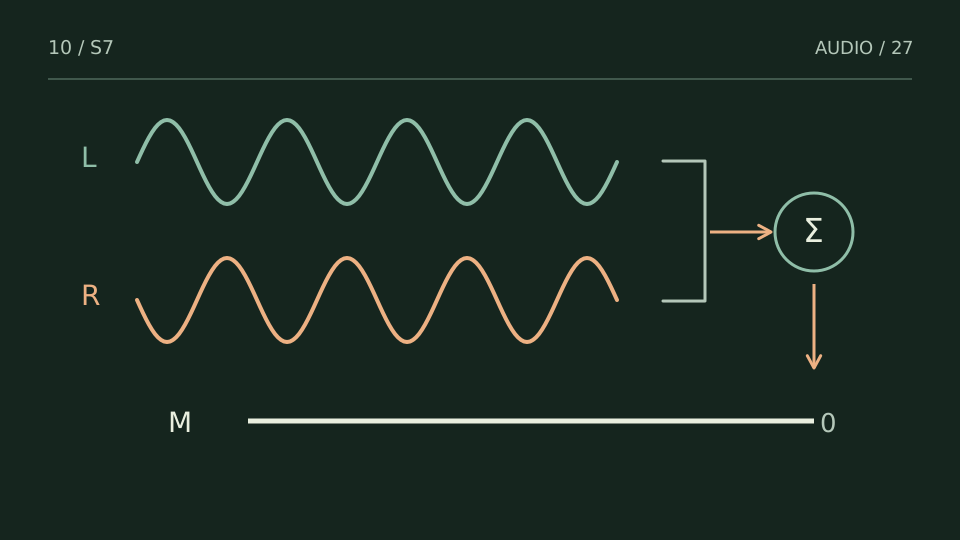
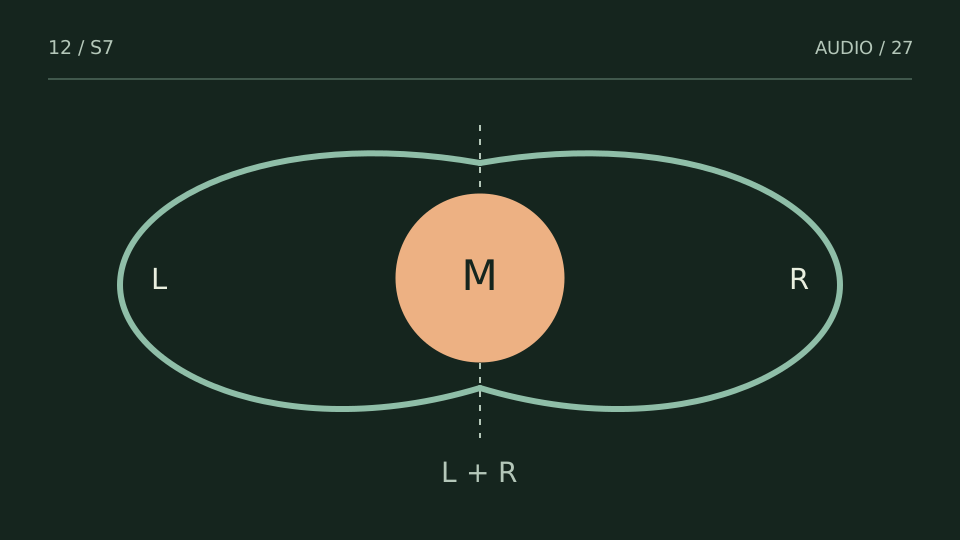
Listen to A in stereo and B as the mono sum of the same material. Part of the example is carried in opposite-polarity side information: summing cancels it and retains the centre.
A practice case
The same signal, a different channel combination
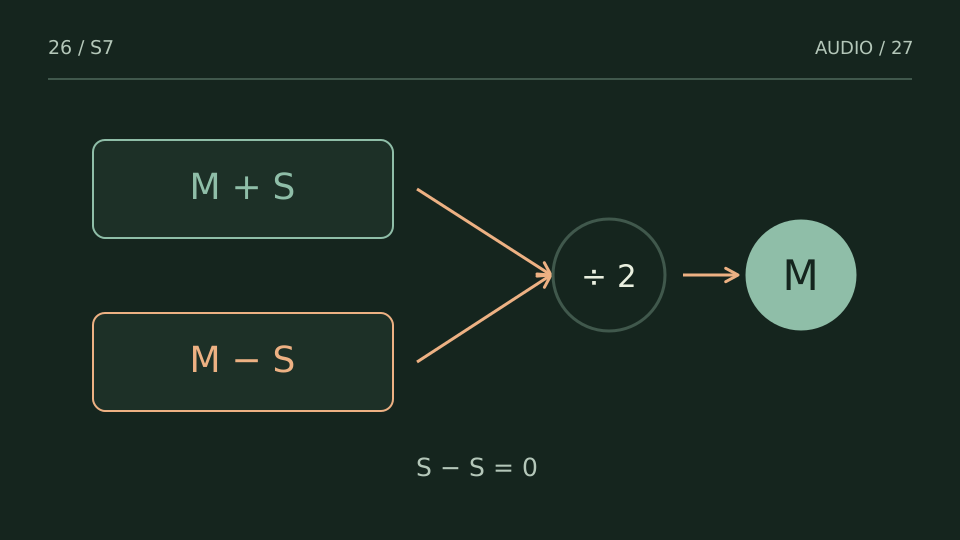
The example uses a centre component M and side component S. A plays L=M+S and R=M−S; B plays (L+R)/2 in both channels. Summing removes S exactly in this model. It does not simulate every possible phase issue; it isolates one so you can hear it.
Start on headphones at a moderate level, then try stereo speakers if available. Speaker and room interaction can change perception. Follow the part that disappears rather than only asking which option feels louder. B does not replace the removed component with compensating gain.
Listening exercise · local audio
Hear the centre and the sides
A: M+S left, M−S right. B: compensated mono sum; the side component cancels.
Use a moderate listening volume. Sound starts only when you press play.
Synthesized illustration, not a hearing test, a recording or a plugin demonstration.
Choose a test from what you hear
| You notice | Try this |
|---|---|
| B retains the centre and loses the side | That is expected for this M/S construction. |
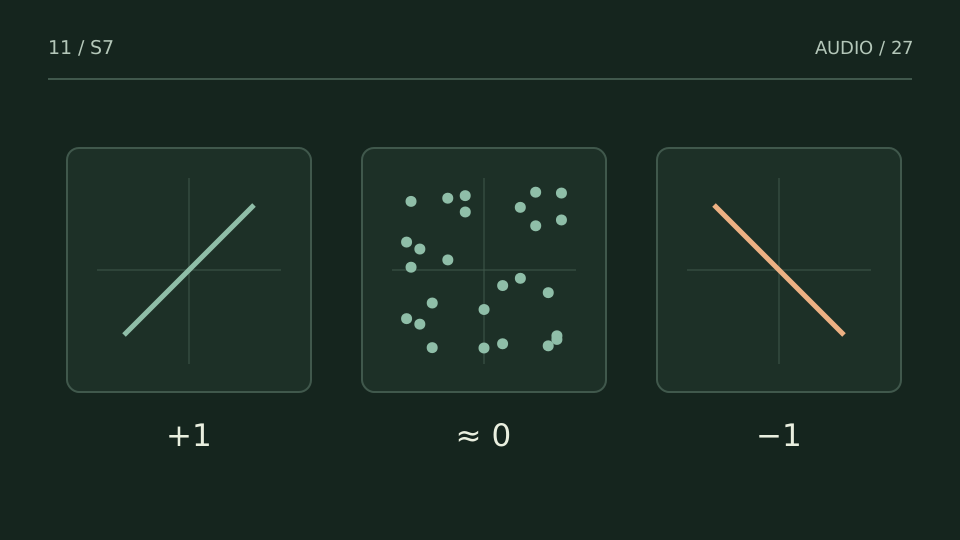
| Your real mix changes only at some frequencies | Investigate delays and phase relationships, not just polarity. |
| Everything drops equally in your host | Check its mono-control level compensation. |
Bring it into your session
One pass, with a clear objective
0 / 4
Checks stay on this page and are not sent anywhere.
When to stop
You can explain what a mono sum preserves and why a meter needs to be accompanied by listening.
Quick diagnosis and decision protocol
Check first
- Keep playback moderate.
- Start with A.
- Switch to B without changing the volume control.
Then decide
- Listen for components that shrink or move.
- Use the real mono test on your own file next.
- Relate the audible change to phase, not just width.
Measurement boundary
The generated signal is intentionally simple; real mixes contain many independent phase relationships.
Watch out for this: Do not use the challenge signal as a target for how wide a real mix should be.
Technical references
Documentation for the methods and product behaviour discussed. Practice cases are illustrative examples, not client case studies.
References reviewed:Try it with your own audio
Choose the free tool that fits your task. You do not need to buy a plugin to use the guide.
Open the free tools →