The starting point
Use Camelot to choose candidates, not to approve a transition without listening. Key helps anticipate harmonic relationships; phrasing, vocals and bass determine how the overlap works.
A practice case
Matching codes, competing vocals
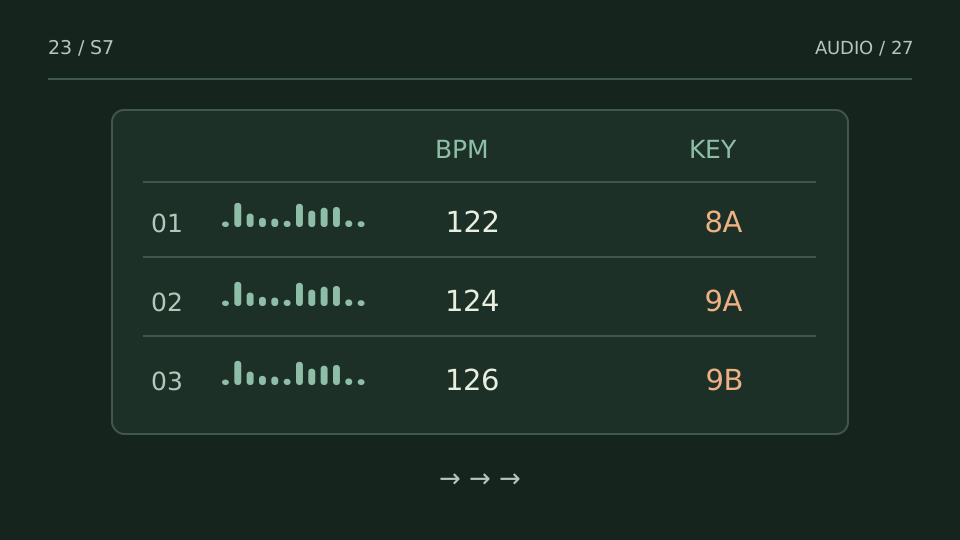
Practice case: two tracks are marked 8A. The match looks straightforward, but their sung choruses enter together. A shared key reference does not prevent two lyrics from competing. Try another entry point or a shorter overlap before changing pitch.
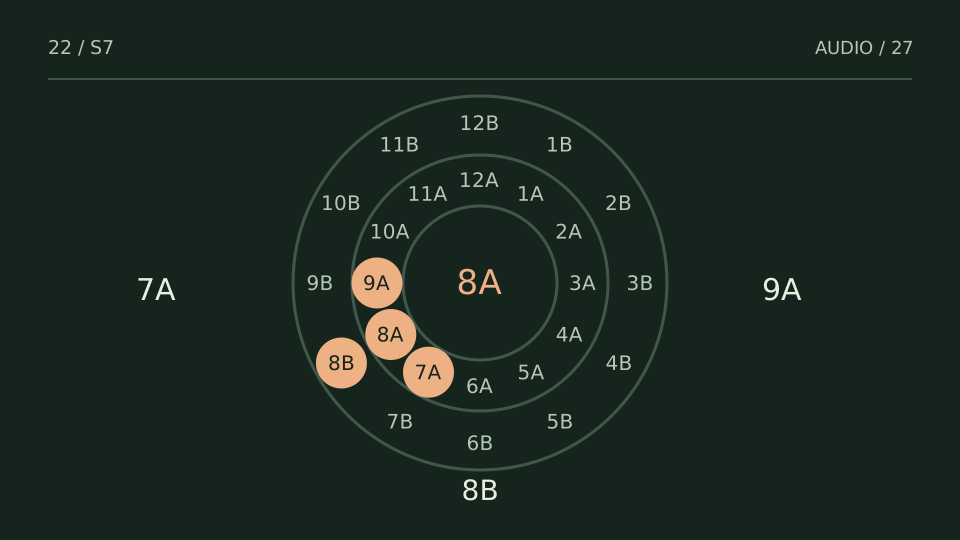
From 8A, the system suggests 8A, 7A, 9A and 8B as initial candidates. This narrows the search; it does not guarantee the outcome. Listen to the actual files, especially when key was automatically estimated, the track modulates or playback speed changes without pitch preservation.
Try the calculation
Tempo to delay time, without guessing
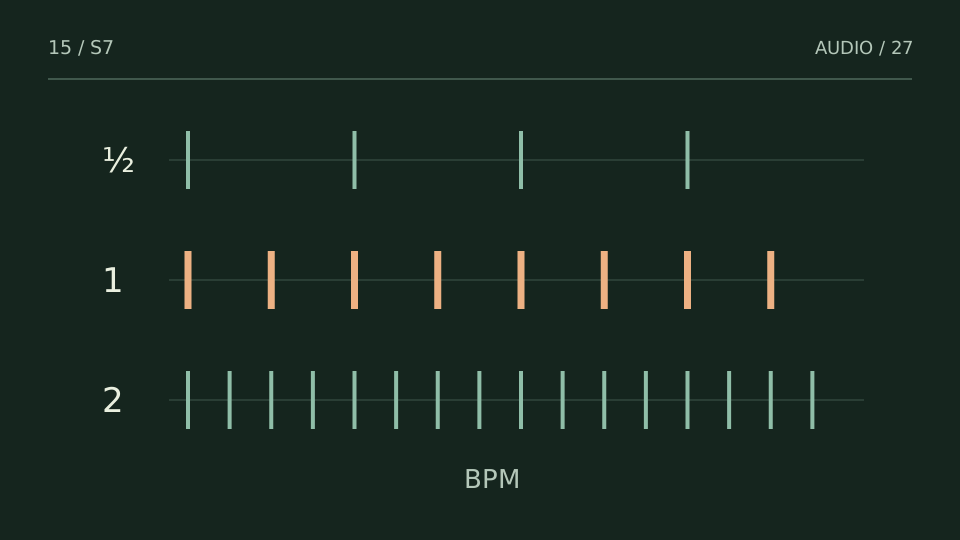
Quarter note = 60,000 / BPM milliseconds. Timing references, not mandatory effect settings.
Test the transition, not just the pairing
A pair may work during a percussive intro and fail when two basslines arrive. Mark the exact exit and entry bars. Check the next phrase boundary and which parts overlap. Preparing two alternatives—a longer blend and a shorter transition—creates flexibility without turning planning into a rigid sequence.
Choose a test from what you hear
| You notice | Try this |
|---|---|
| Codes match but the transition clashes | Check vocals, basslines, phrasing and file version. |
| Codes differ but the overlap works | Judge the actual transition, not only the label. |
| Pitch changes when playback speeds up | Review playback mode and listen again. |
Bring it into your session
One pass, with a clear objective
0 / 4
Checks stay on this page and are not sent anywhere.
When to stop
The transition has an audible intention and works in its actual bars, not just in a compatibility table.
Quick diagnosis and decision protocol
Check first
- Confirm key detection on ambiguous tracks by ear.
- Check the transition section, not only the whole-track label.
- Treat adjacent Camelot moves as options, not obligations.
Then decide
- Use compatible keys when they help.
- Break the rule intentionally when the musical result is stronger.
- Plan energy and phrasing alongside key.
Measurement boundary
A detected key is a model of the track, not a guarantee about every chord or transition point.
Watch out for this: Sorting a set only by key can flatten its energy arc.
Technical references
Documentation for the methods and product behaviour discussed. Practice cases are illustrative examples, not client case studies.
References reviewed:Try it with your own audio
Choose the free tool that fits your task. You do not need to buy a plugin to use the guide.
Open the free tools →