
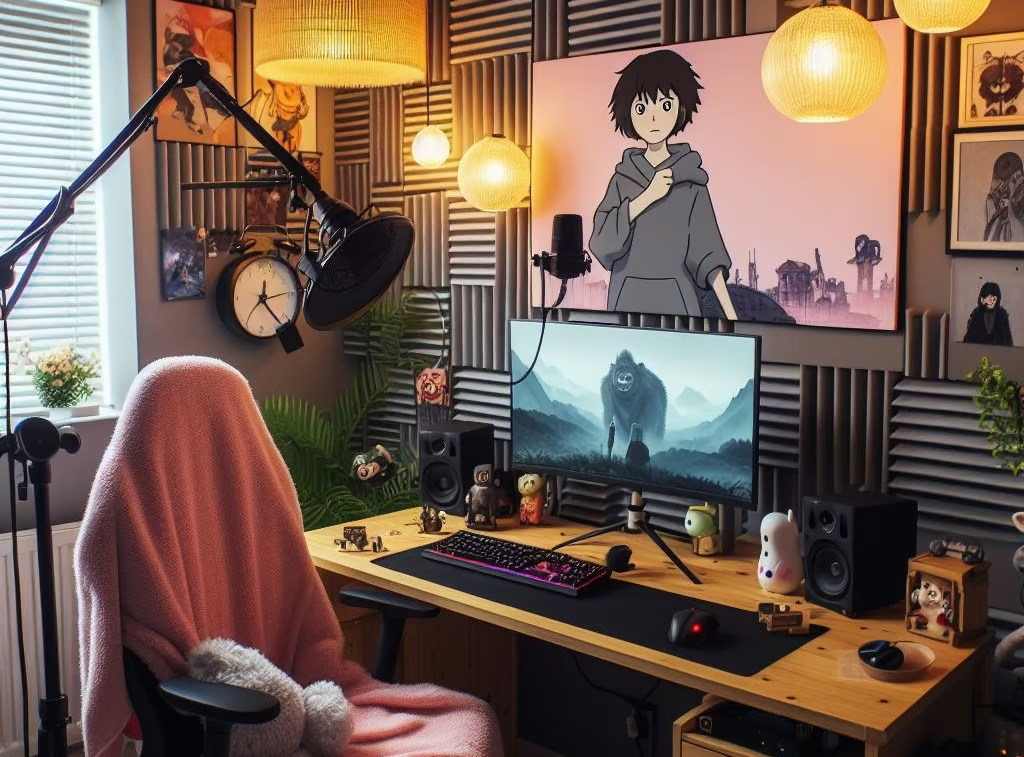
If you’re an upcoming YouTuber or an artist building royalties, you probably want to maximize the quality of your recordings from home. Getting professional acoustics at home can be a challenge, but with the right approach you can get surprisingly close to a studio feel.
Step 1: Evaluate and Prepare Your Space
Start by looking at the space you’re recording in. Do you have a dedicated room, or are you working in a corner of your living room? The shape and size of the space will affect the sound. Here are a few first steps:
- Measure the room: Use a smartphone app to get the dimensions. It helps you understand how sound is likely to behave in the space.
- Spot the usual problems: Lots of hard, reflective surfaces? Windows, wooden floors, and bare walls can create unwanted echoes.
Step 2: Treat the Room
Acoustic treatment is key if you want cleaner recordings. A few recommendations:
- Absorption panels: Place panels on walls and the ceiling to reduce reflections. Acoustic foam can help, but don’t stop at the cheapest option—high-density panels are much more effective at taming problem frequencies.
- Bass traps: Essential for controlling low frequencies that build up in corners.
- Diffusers: To avoid making the room too “dead”, add diffusers to scatter sound more evenly.
Step 3: Monitoring and Gear
Once the room is treated, the next step is making sure you can monitor your recordings effectively.
- Studio monitors: Invest in solid monitors. Models like the Yamaha HS8 or the KRK Rokit G4 are great options. Place them at ear level and form an equilateral triangle with your listening position.
- Microphones: Condenser mics are popular for their sensitivity, but they can pick up too many reflections in an untreated space. A good dynamic mic like the Shure SM7B can be a better option at home because it’s less sensitive to room noise.
List of the 10 Best Microphones for Home Recording
Choosing the right microphone is crucial if you want great sound from home. Below is a detailed list of the 10 best microphones for home recording, going from #10 up to #2. This selection includes both dynamic and condenser mics, each with its own strengths and use cases.
Step 4: Why Good Acoustics Matter
Good acoustics don’t just improve the quality of your recordings—they also make a producer’s job easier. Cleaner audio lets the producer focus on the mix instead of spending time fixing room problems. And a reliable listening setup is essential for making accurate mix decisions.
Success Stories
Some great records were made in home studios. Bruce Springsteen’s “Nebraska” is an iconic example of a home-recorded album that had a massive impact. It shows that with the right mindset and setup, you can get professional results without a high-end studio.
For more tips and gear recommendations, check out the section on the 10 best microphones for recording in semi-treated rooms. Cheers!
2 Responses
test
test 2