
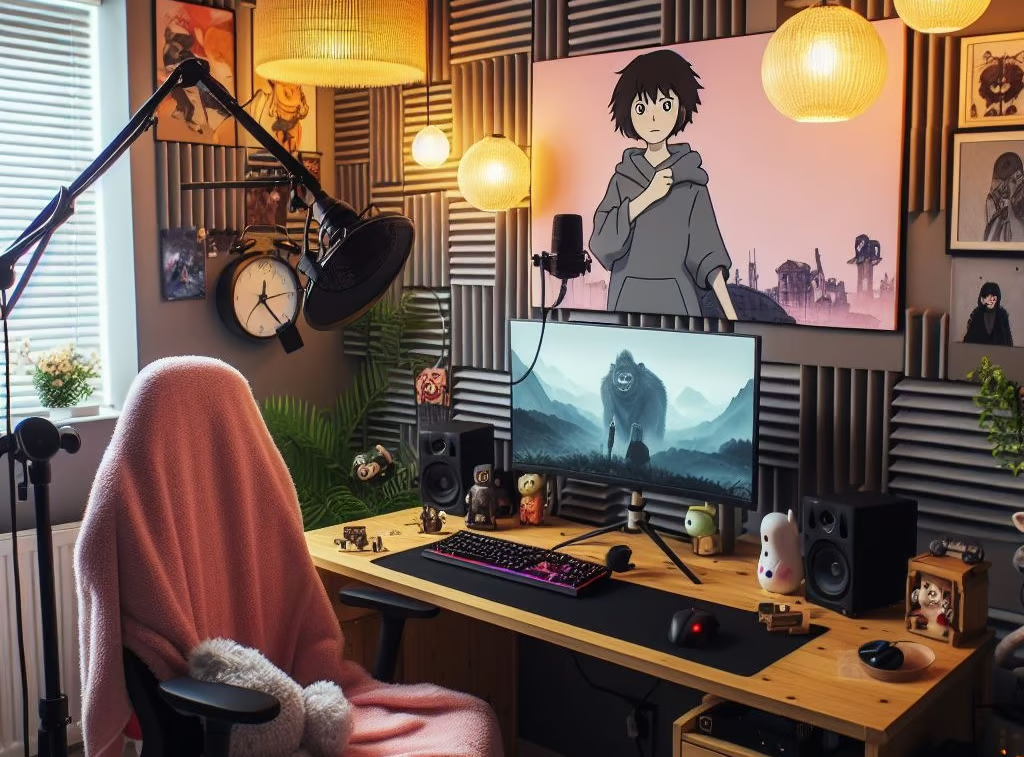
A lot of people recording at home run into the same problem. They do a take, play it back, and something still feels wrong. The vocal bounces in a weird way, the low end feels messy, the whole thing sounds kind of harsh or smaller than it should, and the first instinct is to buy something.
Another mic.
Another interface.
Another plugin.
But a lot of the time, the problem is not the gear.
A lot of the time, it is the room.
And that matters, because a bad room can ruin a recording even when the rest of your setup is actually fine. So before spending more money, it is worth stepping back and asking a simpler question: is the problem really the gear, or is the room working against you?
The real issue is not what to buy. It is what is actually going wrong.
When people look up things like how to improve home studio acoustics, where to place acoustic panels, what first reflection points are, whether bass traps are worth it, or whether acoustic foam actually does anything, they are not really looking for decoration tips.
They are trying to fix a recording problem.
Because a small room, an empty room, or just a badly behaved room can do a lot of damage. It can make a vocal sound boxy, too bright, muddy, blurry, or weirdly uneven. And that is where people often get confused. They blame the mic, the interface, or the plugin chain, when the thing causing the biggest mess is the acoustics.
Acoustic treatment and soundproofing are not the same thing
This gets mixed up all the time, so it is worth saying clearly.
Acoustic treatment is about improving how the room sounds inside.
Soundproofing is about stopping sound from getting in or out.
Those are two different problems.
You can have a room that is pretty quiet but still sounds awful to record in. And you can have a room that leaks sound but is still workable inside. If your goal is to get better recordings at home, the first thing usually is not soundproofing. The first thing is getting the room under control.
What usually messes up a recording in a normal room
In a home studio, the same few problems show up again and again.
Early reflections
These are the fast reflections coming off the walls, ceiling, desk, or anything close to the mic. You do not always hear them as an obvious echo, but you do hear them as a vocal that feels harder, less clear, or just uncomfortable.
Low-end buildup
Small rooms tend to exaggerate low frequencies in some spots and kill them in others. That is why bass can feel huge in one place and disappear in another.
An untreated back wall
The back wall is easy to ignore, but it matters a lot. If it is just sitting there bare, it can throw a lot of energy back into the room and blur what you are hearing.
Too many hard surfaces
Bare walls, glass, hard floors, a big desk — all of that makes a room more reflective, which usually means less control.
Where it actually makes sense to start
If you want to improve a room for real, the best place to start is usually not “everywhere.” It is the parts that matter most.
Corners
This is where low-frequency issues tend to build up the most. That is why bass traps come up so often as the first serious step.
First reflection points
These are the first places sound bounces before reaching your ears or the mic again. Treating those points usually helps a room feel clearer and less aggressive right away.
The back wall
People underestimate this one all the time. A bare back wall can make both recording and listening harder than they need to be.
The ceiling
If you are always working or recording in the same spot, the ceiling can absolutely be part of the problem too.
The point is not to cover every surface just because you can. The point is to treat the parts that actually change how the room behaves.
What if you cannot do a clean, nice-looking setup yet?
That is real life for a lot of people.
Not everyone can build a perfect-looking room with proper panels and a polished setup right away. That does not mean you cannot improve things.
There are rougher, less aesthetic fixes that can still help:
- thick blankets or moving blankets
- a mattress leaned against a wall
- DIY gobos
- heavy fabric in specific spots
- full bookshelves
- couches or other soft furniture
None of those are magic, but they are not useless either.
Thick blankets, for example, can help tame annoying reflections and flutter echo, especially if they are not pulled tight against the wall and you leave a bit of space behind them. What they do not do very well is deal with serious low-end problems. That is where people expect too much from them.
Mattresses, heavy blankets, and homemade gobos can also help more than people think, especially for vocals. They are not elegant, but if you place them well, they can cut down the reflections that are making a take sound ugly.
Bookshelves can help too, especially if they are full and uneven. They can break up reflections and make a room feel less harsh. But they are not a precise solution, and they are not a replacement for real treatment when you need actual control.
Rugs are another good example. They help a bit, mostly with some mid and high-frequency reflections, but they do not solve the deeper problems in a small room. So yes, they help. No, they are not enough by themselves.
Acoustic foam helps, but it is not the full answer
Foam can absolutely help in the mids and highs if it is used well. The problem is that people often expect it to solve the entire room, and that is where it falls apart.
In small rooms, the hardest part is usually the low end. And thin foam does very little there.
So if you are asking whether acoustic foam works, the honest answer is:
yes, it helps — but on its own, it is rarely enough to sort out a whole room.
How to improve a room without turning it into a science project
You do not need to make it overly complicated, and you do not need to spend a fortune right away. What matters most is fixing the biggest problems first.
A sensible order would be:
- look at where you are actually recording
- figure out what surfaces are closest and causing obvious reflections
- treat first reflection points
- add some control in the corners
- look at the back wall
- use temporary fixes if permanent ones are not possible yet
That usually gets you much further than buying random acoustic panels and sticking them up wherever they fit.
How to tell if the room is the problem
There are a few signs that come up all the time:
- your voice sounds different depending on where you stand
- your recordings sound more reflective than they should
- the low end feels uneven
- your mixes do not translate well outside the room
- a take sounds okay at first but later feels harsh or awkward
- every time you open the mic, it feels like too much room comes in with it
If that sounds familiar, it is worth looking at the room before buying anything else.
Final thought
If your home studio is not sounding right, do not assume the problem is the mic, the interface, or the next plugin on your wishlist.
A lot of the time, the real difference comes down to simpler things that matter more: how the room reacts, where the reflections are, what is happening in the corners, what the back wall is doing, and whether the room is helping the recording or getting in the way.
And if you cannot build the perfect setup yet, that does not mean you are stuck. There are temporary fixes — ugly ones, if necessary — that can still make things noticeably better. Thick blankets, DIY gobos, mattresses, soft furniture, loaded bookshelves. They are not a replacement for proper treatment, but they can absolutely help you get the worst of the room under control.
Once the room stops fighting you, that is when everything else starts making more sense.


2 Responses
test
test 2